
The Sierra Leone home incinerator represents a critical advancement in waste management technologies, particularly in regions with evolving public health infrastructures and increasing waste challenges. Designed for both residential and community applications, these systems are engineered to support sustainable waste solutions while ensuring compliance with local and international regulations. The technology is equipped to handle various waste types, further underscoring its relevance in industrial applications. As cities expand and environmental responsibilities grow, the effective management of solid waste has become paramount, providing a robust context for the integration of incinerators in both home and commercial settings.
As nations invest in improved waste treatment methods, the Sierra Leone home incinerator stands out for its versatility in catering to different waste management needs. Given the economic and environmental shifts globally, discussions around decentralized waste treatment solutions are gaining momentum. Such mechanisms not only address on-site disposal but also significantly contribute to reducing greenhouse gas emissions by completing the waste-to-energy cycle. The rigid design and engineered features of these incinerators enhance their operational durability, forming a competent link in the supply chain to ensure robust waste management practices.
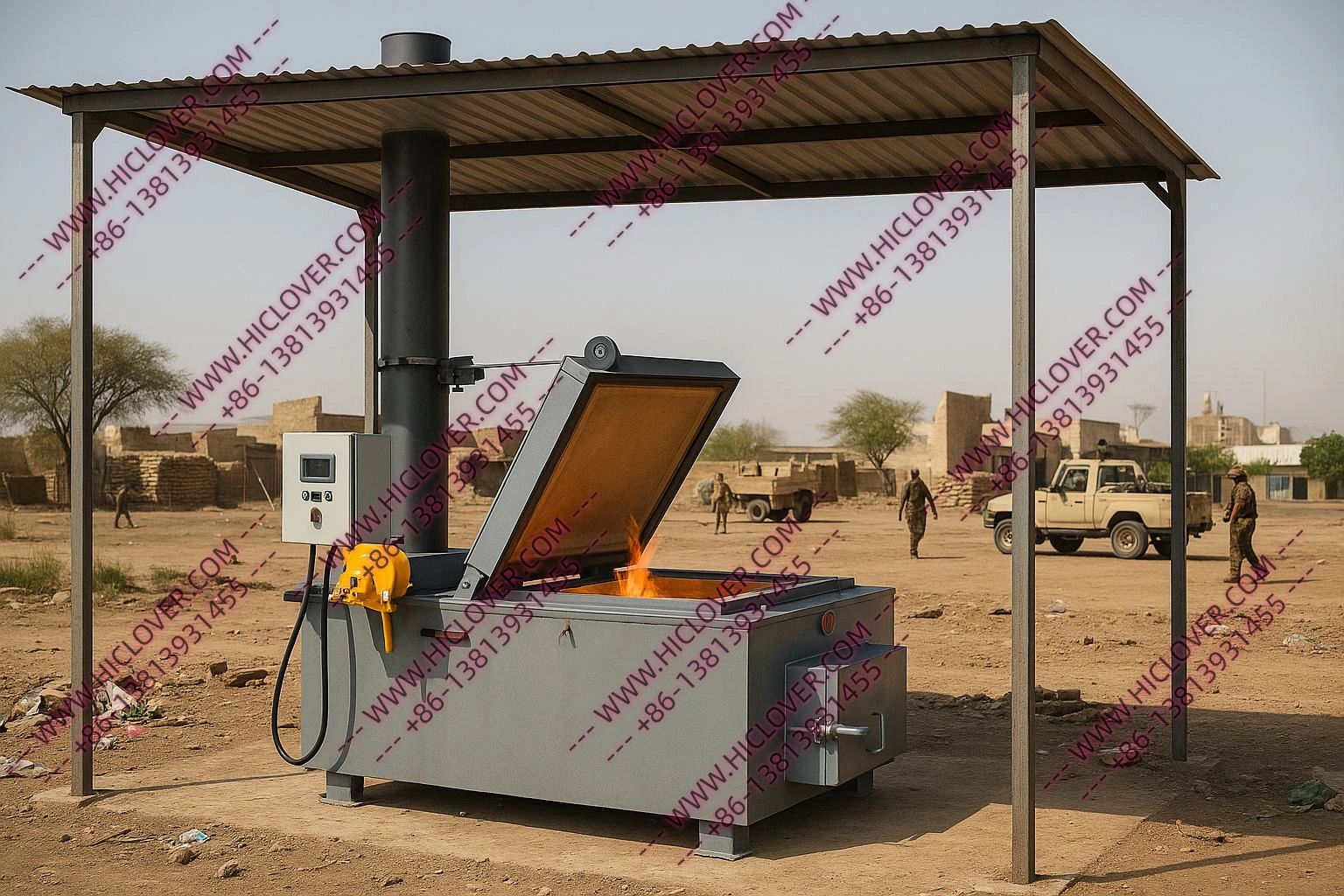
Technical Principles of Home Incineration
Incineration as a waste treatment method involves high-temperature combustion, whereby organic substances within waste materials are thermally decomposed. In home incinerators, this process typically requires precise temperature control, ensuring complete mineralization of waste and minimal emissions. The internal structure of these incinerators is characterized by high-temperature retention (HTR) chambers, which are capable of reaching operational temperatures upwards of 1400°C, supported by corundum thermocouple monitoring systems. This feature is vital in maintaining optimal thermal conditions and achieving efficient combustion outcomes.
The combustion process begins with waste inputs being fed into the incinerator through loading doors, which come in various designs: side, front, or top loading. This operational flexibility caters to different waste types, including household refuse, medical waste, and other solid municipal contaminants. For example, the incineration of medical waste necessitates stringent temperature controls and regulated feed rates. Thus, automatic temperature regulation systems integrated with PLC automatic controls provide necessary feedback for ensuring compliance with safety standards and operational efficiency.
Moreover, advanced smoke scrubbing technology is typically employed to address the gaseous by-products resulting from combustion. Incinerators can utilize either dry or wet scrubber systems to filter harmful emissions before they are released into the atmosphere. The implementation of scrubbing systems ensures that emissions are kept within permissible limits, thus aligning with environmental regulations and enhancing the unit’s integrity in the long term.

Comparative Analysis of Incinerator Types
When evaluating the varying types of incinerators, several critical factors need to be considered, including capacity, operational efficiency, waste input types, and structural design. Home incinerators typically range in capacity from 5 to 1000 kg per hour, allowing for tailored solutions that accommodate specific waste management needs. Larger units may incorporate features such as integrated fuel tanks and intelligent fuel-saving systems, which reduce operational costs and optimize performance.
Incinerators designed for specialized applications, such as medical waste or animal waste incineration, might also feature customized chamber sizes (ranging from 100 to 6000 liters) and unique operational settings. For instance, medical waste incinerators require higher combustion temperatures and often include advanced safety features such as continuous feed protection sensors, thereby ensuring that operators are shielded from potential hazards.
Decentralized waste treatment systems are increasingly favored due to their ability to operate closer to waste generation sources, thereby enhancing supply chain resilience. Solutions like mobile incinerators, whether containerized, trailer-mounted, or sledge types, introduce flexibility and are easily deployable in remote locations. This capability is especially significant in the context of global public health crises, where immediate action is necessitated for proper waste management. Engineering firms like HICLOVER have capitalized on this trend, offering customizable incinerators designed to meet specific client needs while ensuring compliance with various regulatory frameworks and emission standards.
The Role of Incinerators in Environmental Sustainability
The incorporation of Sierra Leone home incinerators into local waste management strategies promotes environmental sustainability by addressing issues of carbon compliance and reducing landfill dependency. Incineration transforms waste into energy, thus contributing to a circular economy where resources are kept in use for as long as possible. The residual ashes can then be further processed or disposed off in a manner that aligns with environmental conservation principles.
Regulatory frameworks surrounding waste management have evolved significantly, aiming to reduce carbon footprints and promote environmentally responsible practices. Home incinerators that comply with stringent emissions controls can be favorable assets in this landscape. For example, the employment of automatic cooling systems and alarm features ensures that emissions are continuously monitored and controlled, thereby minimizing risks related to air quality and public health. Incorporating modern scrubbing techniques further mitigates possible environmental impacts, aligning with ESG investment criteria.
The ongoing global focus on AI-driven automation is also proving to be transformative within the incineration landscape. By implementing machine learning algorithms and predictive maintenance techniques, operators can optimize incineration processes, thereby reducing labor costs and operational downtime. Such advancements support a shift towards more sustainable and efficient waste management practices, particularly relevant in expanding urbanized areas like those emerging in Sierra Leone.
Engineering Experience and Customization Opportunities
HICLOVER’s engineering experience positions it uniquely within the global market for waste management solutions. With a strong manufacturing foundation, the company has established itself as a reliable provider of incineration technologies suited for diverse applications. The in-depth engineering expertise facilitates factory-direct customization capabilities, accommodating varied client specifications based on waste types, emissions requirements, and operational scales.
The decentralized, modular nature of many of HICLOVER’s designs allows for rapid deployment without the extensive installation processes typically associated with larger incineration plants. Offering configurations such as containerized and trailer-mounted incinerators not only increases operational efficiencies but also reduces logistical complexities, ultimately enhancing response times in waste management scenarios.
These traits establish a framework of supply-chain reliability that is vital for clients operating in regions with inconsistent waste management infrastructure. The company’s commitment to quality control and adherence to international standards also fosters confidence among potential customers looking for effective waste disposal solutions, particularly in areas transitioning towards infrastructural maturity.
For those seeking more tailored solutions, HICLOVER provides comprehensive engineering consultations to discuss specific applications, allowing potential clients to address unique waste management challenges. More information regarding these offerings can be found on their official platform.
Application Scenarios in Remote Locations
The versatility of incineration technology is further exemplified by its effectiveness in remote-site deployments. Consider scenarios in Sierra Leone, where traditional waste management systems may be lacking. Decentralized incinerators can be employed in various settings, including villages, hospitals, or industrial sites where waste generation is high and immediate disposal solutions are necessary.
Home incinerators, particularly, may be utilized in family settings to manage biodegradable waste, thus supporting local composting initiatives. Moreover, hospitals in remote areas may leverage medical incinerators to safely dispose of regulated materials, representing a significant advancement in maintaining public health standards.
Significant benefits also arise from the integration of automatic protection operator (APO) systems, which enhance operational safety within these incinerators. By actively monitoring the combustion process and providing real-time feedback, these mechanisms foster an environment of safety, ensuring the protection of operators and reducing risks associated with fire hazards.
The adoption of incinerators also intersects with environmental goals, as communities focus on reducing their carbon footprints. With an emphasis on the circular economy and efficient resource recovery, incinerators have become crucial for managing the waste output effectively, tying directly into the larger trends of sustainability and ecological responsibility.
In practice, local governments may implement programs encouraging the adoption of home incinerators, thereby promoting community engagement in waste management processes. As public awareness around sustainability grows, these measures can facilitate education on proper waste disposal practices, leading to improved environmental health outcomes.
In summary, the Sierra Leone home incinerator not only represents a significant technical achievement but also embodies the convergence of several global trends—decentralized waste treatment, public health focus, and sustainability imperatives. This integrated solution reflects both a response to immediate waste challenges and a proactive approach to future resource management, making it an essential asset in the potentially transformative waste landscape of Sierra Leone and beyond.
Categories:
Tags: