
The establishment of a Guinea-Bissau incinerator for medical waste holds significant relevance in the context of contemporary public health infrastructure and environmental sustainability. A robust incineration system addresses the acute need for managing biohazardous materials generated by healthcare facilities, thus ensuring compliance with global health standards and environmental regulations. Enhanced engineering solutions, when tailored to local conditions, foster supply-chain stability in waste management, minimizing logistical disruptions. The integration of advanced technologies in incinerator design, such as PLC automatic controls and intelligent fuel-saving systems, substantiate the engineering credibility necessary for effective operation. As countries like Guinea-Bissau seek to bolster their health systems, the demand for efficient, reliable waste treatment solutions is critical.
Technical Principles of Medical Waste Incineration
Medical waste incineration is predicated upon thermodynamic principles whereby waste materials are subjected to high temperatures to facilitate combustion. The core function of an incinerator is to convert hazardous waste into inert ash, flue gases, and heat energy. The combustion process involves three distinct phases: drying, volatilization, and ash formation.
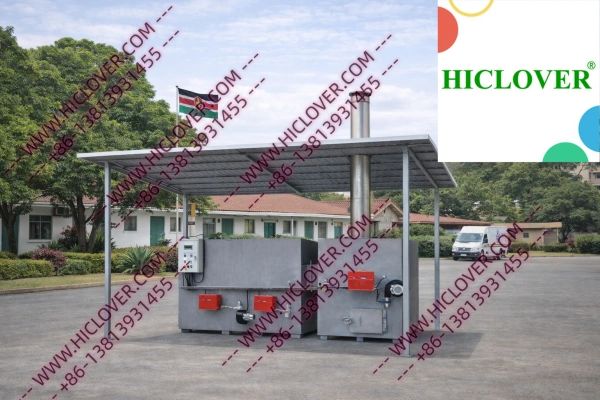
High-Temperature Retention (HTR)
A critical aspect of incineration technology is the implementation of High Temperature Retention (HTR) strategies, where combustion temperatures exceed 1400°C. This high thermal environment promotes the effective breakdown of complex organic compounds present in medical waste. Efficient thermal destruction not only minimizes the volume of waste but also mitigates the release of harmful emissions into the atmosphere, thereby aligning with regulatory frameworks established by international health organizations.
Moreover, the incorporation of advanced monitoring systems, such as the 1400°C Corundum Thermocouple, facilitates real-time tracking of operational temperatures, ensuring that any deviation can trigger an automatic cooling and alarm system to safeguard both the equipment and the environment.
Smoke Scrubber Technologies
To enhance emission control, incinerators often utilize smoke scrubbers, such as dry and wet scrubber systems. These technologies play a pivotal role in filtering out particulate matter and harmful gases generated during combustion. For instance, a wet scrubber employs a liquid medium to capture and neutralize acid gases, while a dry scrubber uses reagent sorbents to trap harmful compounds. The choice between these systems depends on the specific waste treatment scenario, and operational requirements, including available space and intended emission limits.
The increasing emphasis on limiting environmental impacts has propelled the adoption of such technologies, fostering compliance with stringent emission regulations worldwide. As countries develop or enhance their waste management infrastructure, understanding the underlying technical principles becomes essential.
Types of Incinerators: A Comparative Overview
In considering the application of a Guinea-Bissau incinerator for medical waste, it is essential to evaluate different types of incinerators based on their features, capacities, and intended applications. Incinerators can generally be classified into two main categories: batch incinerators and continuous feed incinerators.
Batch Incinerators
Batch incinerators operate on a load-by-load basis, where waste is introduced into the combustion chamber for treatment and removed once processing is complete. This type of incinerator is suitable for smaller medical facilities or those that generate less waste. However, the operation can be less efficient compared to continuous systems, leading to increased labor costs and longer processing times.
Continuous Feed Incinerators
In contrast, continuous feed incinerators allow for uninterrupted waste input, often employing mechanisms such as side or top-loading feeding doors. This design enables facilities with higher volumes of waste to maintain effective operations with minimal downtime. The capacity of these systems typically ranges from 5 to 1000 kg per hour, making them ideal for larger health institutions or regional waste management centers.
When discussing incinerator configurations, factors such as chamber volume, fuel options (diesel, natural gas, or LPG), and the presence of automated protective features should be assessed. Continuous Feed Protection Sensors, for instance, ensure that operational integrity is maintained by preventing unintended overloads, a crucial feature for ensuring worker safety and system reliability.
Modularity in Incinerator Design
The trend towards modular and mobile incineration solutions has gained traction, particularly in regions experiencing rapid urbanization or where centralized waste management facilities are impractical. Containerized or trailer-mounted incinerators offer the flexibility needed for medical waste treatment in changing operational environments. Such systems can be pre-fabricated for rapid deployment and require minimal installation, catering to the urgent demand for efficient waste management solutions.
HICLOVER, with its extensive engineering experience, provides factory-direct customization options tailored to the unique requirements of different regions, including Guinea-Bissau. Their incinerator models emphasize streamlined logistics, enabling quick setup and operation in remote or decentralized settings. Given the scrutiny surrounding environmental, social, and governance (ESG) factors, the ability to adjust engine performance and ensure compliance with local regulations can substantially enhance organizational credibility.
Additionally, mobile incinerator units can serve communities affected by natural disasters, ensuring that medical waste generated from emergency responses is managed safely, thus preserving public health. The rapid scalability and deployment of these systems resonate strongly with the current trend toward decentralized waste treatment approaches.
Regulatory Background and Compliance Framework
In light of international health initiatives, the need for strict regulatory frameworks governing medical waste management cannot be understated. The World Health Organization (WHO) and local government bodies outline protocols for managing hazardous medical waste. Adherence to specific temperature requirements during incineration, as stipulated in various guidelines, ensures the complete destruction of pathogens while minimizing toxic emissions.
Compliance with regulations necessitates advanced features such as PLC Automatic Controls which automate operational parameters, ensuring that incinerators operate within designated safety and environmental thresholds. This technological innovation also allows for better monitoring and data logging, providing facilities with the documentation needed for regulatory audits.
A Guinea-Bissau incinerator for medical waste thus must be equipped to meet specific operational certifications and align with the global mandate on waste management. Investing in infrastructure that not only satisfies current environmental prerequisites but also anticipates future compliance challenges can enhance the development and execution of a country’s health and environmental policies.
For further insights into the intricate requirements pertaining to medical waste incineration, a search for medical waste incinerator temperature requirements will uncover valuable technical standards and guidance.
Industry Trends and Future Development
As the global landscape shifts towards sustainable practices, several key trends underpin the evolution of waste management technologies. The integration of Artificial Intelligence (AI) is at the forefront, enabling smart incineration solutions that optimize fuel utilization and monitor system performance in real time. AI-driven automation minimizes human intervention, streamlining workflows while enhancing safety measures.
Moreover, the broader objectives encompassing supply-chain resilience emphasize the need for reliable systems that can withstand disruptions, be they man-made or natural. Incinerators designed with robust construction methods and adaptable service models, including mobile units, are critical in fortifying medical waste management responses to emergent situations.
Investment entities increasingly prioritize the alignment of their portfolios with ESG standards, encouraging innovation in waste treatment technologies. This investment trend invites opportunities for start-ups and established manufacturers alike to enhance their offerings within the incineration space, ensuring that the solutions provided are environmentally compliant, economically feasible, and socially beneficial.
Ultimately, as countries improve their medical waste management infrastructure, the demand for a reliable Guinea-Bissau incinerator for medical waste reflects a commitment to not only public health but also sustainable environmental practices. The evolution of these systems, driven by technological advancements and enhanced regulatory frameworks, will determine the efficacy of waste treatment approaches for years to come.
Engaging with a trusted manufacturer such as HICLOVER guarantees access to high-quality incineration solutions, characterized by customized features and export reliability. Organizations interested in these systems can explore further details through their offerings at HICLOVER’s website for a comprehensive view of available technologies and consultation services.
Categories:
Tags: