
Senegal Hospital Incinerator: Technical Overview and Applications
In the realm of waste management technologies, the Senegal hospital incinerator stands out for its crucial role in ensuring public health and environmental safety. Recognizing the increases in waste generated by medical facilities, the engineering of these incinerators incorporates advanced combustion logic and safety protocols to mitigate health hazards associated with improper waste disposal. This integration of technology serves the dual function of protecting both human health and the environment, making it a vital component in Senegal’s public health infrastructure. As issues surrounding waste management become increasingly urgent, investing in reliable industrial solutions fosters supply-chain stability and enhances local capabilities.
Medical waste in particular poses significant challenges, necessitating specialized treatment to prevent exposure to infectious materials. Effective waste management systems, like the Senegal hospital incinerator, effectively reduce the volume and toxicity of hazardous waste while generating minimal emissions. In parallel, global trends influencing waste management—such as decentralized treatment options, ESG investment strategies, and the push towards carbon compliance—are essential in framing current applications of incineration technology.

The Fundamentals of Hospital Waste Incineration
Technical Principles of Combustion
Underpinning the technology of hospital incinerators is the principle of combustion, a chemical reaction between waste materials and oxygen that produces heat, light, and gases. Incinerators designed for medical waste often require high combustion temperatures ranging from 1000°C to 1400°C, a necessity for effective pathogen destruction. The high temperature retention (HTR) capabilities of an incinerator, maintained through 1400°C corundum thermocouple monitoring, play a critical role in ensuring complete combustion and eliminating the potential for dioxin formation in exhaust emissions.
Moreover, the structural design of these incinerators typically features a PLC automatic control system that manages temperature fluctuations and operational efficiency. Automated systems enhance reliability and consistency, mitigating risks associated with human error during waste processing. Various feeding door configurations—side, front, or top loading—allow for versatile integration into existing hospital workflows.
Regulatory and Compliance Standards
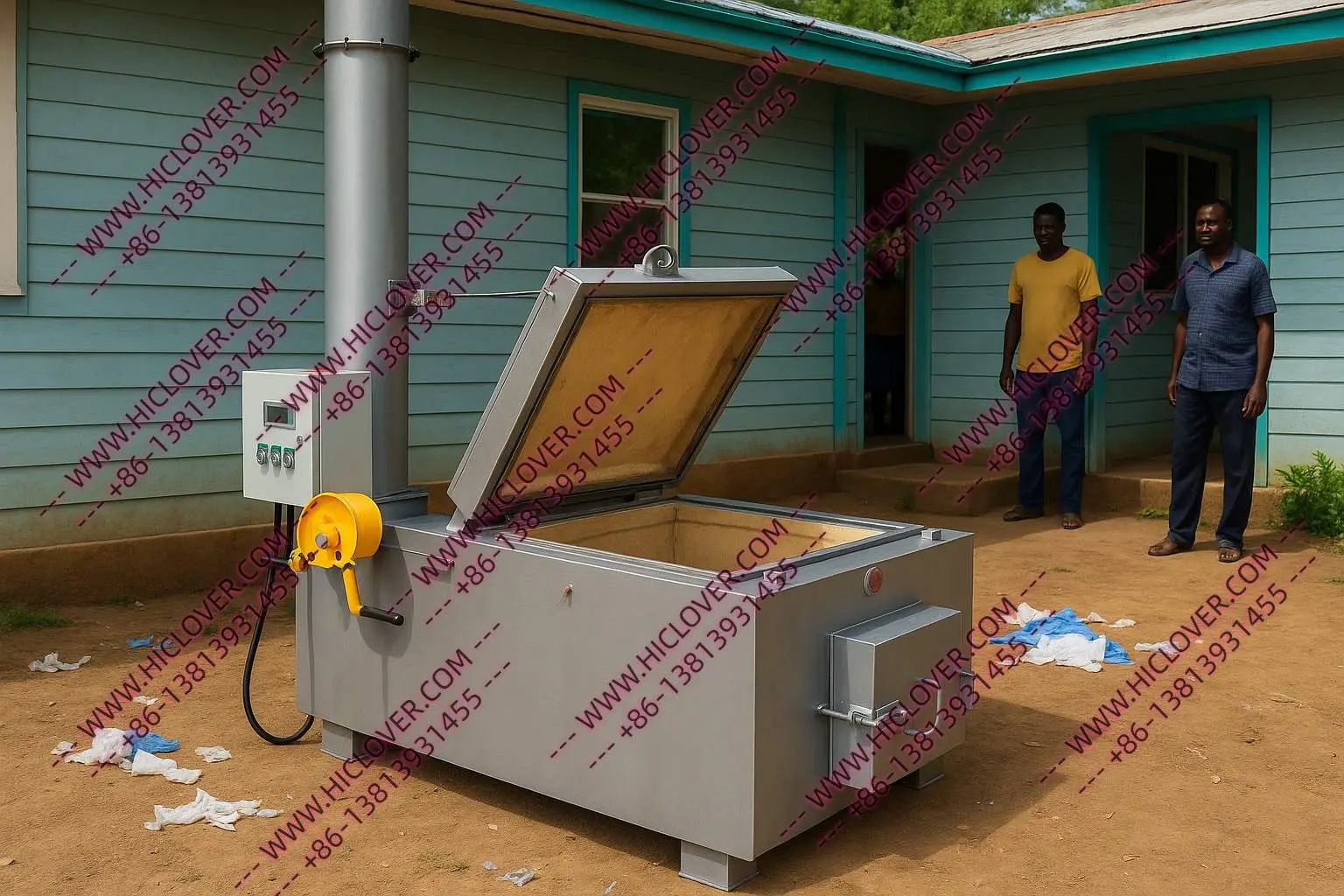
Technological advancements in medical waste incineration must align with regulatory standards set forth by organizations such as the World Health Organization (WHO) and the United Nations Environment Programme (UNEP). Compliance with emissions standards governs how these incinerators operate, particularly concerning particulate matter, dioxins, and furans. Countries like Senegal are moving towards stricter regulations surrounding hospital waste management, integrating best practices related to environmental protection.
This regulatory framework influences not only the design and operation of hospital incinerators but also their adoption in the marketplace. As the incineration technology evolves, options such as wet scrubber systems and dry scrubber systems are often employed to treat exhaust gases before release into the atmosphere. By ensuring emissions are minimized through such systems, facilities can maintain compliance and uphold their commitment to environmental sustainability.
Comparative Analysis of Incinerator Types
Types of Incinerators
When evaluating incinerators for hospital applications, it is essential to understand the different types available alongside their corresponding capacity ranges. While many hospital incinerators are stationary, mobile options such as containerized types provide greater flexibility for short-term deployment in remote areas or during disaster relief operations. These containerized systems facilitate rapid response to emergent waste management needs, supporting decentralized waste treatment trends.
Generally, hospital incinerators can process waste in capacities ranging from 5 to 1000 kg per hour, which allows for a variety of application scenarios across different healthcare settings. Smaller units, ideal for clinics, reduce carbon footprints and operational costs. Larger systems, often used in tertiary hospitals, integrate robust features such as continuous feed protection sensors to regulate incoming waste and prevent operational disruptions.
Fuel Options and Economic Considerations
The choice of fuel significantly influences the operational cost and efficiency of an incinerator. Diesel, natural gas, and LPG are common options, each subject to distinct cost fluctuations. Diesel, while often more economical, can lead to higher carbon emissions. Conversely, natural gas and LPG offer cleaner-burning alternatives but may present higher supply chain complexities, especially in regions with limited infrastructure.
Additional considerations include installation and maintenance expenses associated with different incinerator types, as well as the potential for factory-direct custom solutions. Variability in price points necessitates a careful evaluation when selecting incinerators, with facilities requiring precise capacities and features aligned to waste types, like medical, animal, or solid municipal waste.
Engineering Advances in Incineration Technology
Innovations Driven by ESG and Automation
As the environmental, social, and governance (ESG) criteria gain traction in corporate investment protocols, incineration technology is not immune to these influences. Innovations in incinerator design focus on minimizing emissions and improving operational efficiencies, advocating for greener technologies as society strives to meet climate goals. The use of intelligent fuel-saving systems allows these devices to optimize fuel consumption without sacrificing performance.
Furthermore, the integration of AI-driven automation marks a significant leap in incinerator technology. Automated systems enhance monitoring through real-time data analytics and provide predictive maintenance capabilities, reducing downtime and increasing operational reliability. The incorporation of remote monitoring facilitates enhanced supply-chain resilience, a contemporary requirement for industries reliant on uninterrupted waste management processes.
Remote-Site Deployment and Modular Solutions
The growing demand for mobile and modular incineration solutions reflects the current economic sensibilities prioritizing ease of deployment and adaptability in waste treatment. Trailer and sledge configurations allow for straightforward transportation and on-site treatment capabilities, crucial for regions with limited waste processing infrastructure. This flexibility is essential for countries like Lesotho, where the cost of stationary waste incinerators may become prohibitive. Engaging in a service such as that provided by HICLOVER affords potential buyers the opportunity to utilize factory-direct, customized solutions suitable for specific regional needs. For example, facilities can benefit from minimal installation requirements, ensuring rapid deployment without extensive infrastructural investments.
Cost Implications of Incinerators
The economic landscape surrounding incineration solutions underscores a critical aspect: the cost of waste management technologies, particularly for countries like Lesotho. The Lesotho waste incinerator cost factors in design, manufacturing, transportation, and installation, each variable influencing the decision-making process for healthcare facilities. Open discussions with suppliers about production capabilities and shipping options can lead to negotiations resulting in cost-effective solutions while upholding necessary compliance and environmental standards.
Organizations such as HICLOVER, well-versed in navigating the complexities associated with global supply chains, provide engineering consultations that help potential clients identify the most appropriate models based on their operational needs and local context. By building a reliable supplier relationship, hospitals can ensure a stable inflow of resources, mitigating disruptions in waste management systems.
To explore more about waste incineration technology and its implications for public health infrastructure, one may refer to search queries such as https://www.google.com/search?q=medical+waste+incinerator+temperature+requirements.
Stakeholder Perspectives and Future Considerations
Engaging Healthcare Stakeholders
In moving forward, an inclusive dialogue among healthcare stakeholders is essential. The perspectives of local governments, hospital administrators, waste management specialists, and community representatives direct the approach taken toward incineration technology adoption. A transparent negotiation of benefits and risks allows for a comprehensive evaluation of different incinerator technologies.
Moreover, as environmental regulations evolve, the specialization of incinerators to meet varying needs becomes paramount. Continuous innovation across sectors, focused on improving waste treatment methods and reducing carbon footprints, is fundamental to achieving sustainable waste management solutions.
Conclusion
The engineering credence demonstrated in incineration technology, particularly through the Senegal hospital incinerator, aligns with contemporary practices influenced by global trends and stakeholder demands. As public health infrastructure grows increasingly strained under the weight of rising waste output, harnessing sophisticated waste management technologies becomes indispensable. The intricate balance between environmental compliance, operational efficiency, and cost-effective solutions remains central to advancing waste treatment methodologies, making ongoing research and development a priority in the coming years. Every aspect, from choosing the appropriate fuel to opting for intelligent automation, continues shaping this essential facet of modern healthcare architecture.
Organizations like HICLOVER exemplify how integrated solutions can advance the incineration landscape, delivering customized, robust technologies to meet health and environmental challenges in a dynamic global landscape. By offering factory-direct solutions adaptable to the specific demands of any hospital or healthcare facility, they play a crucial role in shaping future outcomes in medical waste management. For further inquiries into these innovative solutions, consulting HICLOVER stands as a viable option for those navigating the intricate demands of waste incineration.
Categories:
Tags: