Medical Waste Incineration in Angola: Rising Demand, Real-World Solutions
Angola is undergoing a period of transformation in its healthcare sector. With increased public and private investment in hospitals, clinics, and maternity centers, the country is seeing a growing volume of medical waste that requires safe, consistent, and compliant disposal. This reality is creating significant demand for reliable medical waste incineration technologies.
In many provinces of Angola, especially outside major cities, hospitals and health facilities are struggling with outdated or improvised waste handling systems. Hazardous materials ― including sharps, contaminated surgical disposables, pharmaceuticals, and biological waste ― are often stored in inadequate containers or mixed with general waste. In many cases, facilities lack functioning incinerators entirely.
This situation presents not only a public health challenge but also an opportunity: to introduce modern, self-contained incineration systems that align with the real infrastructure and logistical conditions in Angola.
Market Characteristics: Waste Pressure Meets Infrastructure Gaps
The Angolan medical sector generates large quantities of waste daily, and a notable portion of it is considered infectious or hazardous. However, waste segregation practices are inconsistent. Disposal often involves makeshift burning methods or uncontrolled dumping ― both of which pose serious health and environmental risks.
The current infrastructure for handling hazardous waste is fragmented. Most regions lack centralized landfills for hazardous materials, and long-distance waste transport is not always feasible or safe. Smaller health centers, which make up a large portion of Angola’s healthcare network, often have no access to proper disposal services.
As healthcare delivery improves and waste volumes increase, this infrastructure gap becomes even more visible ― pushing hospitals and public agencies to seek on-site incineration options that do not rely on external services.
Demand Trends: Toward On-Site, Scalable Waste Treatment
The market for medical waste incineration in Angola is trending toward decentralized, facility-level systems. Instead of relying on regional incineration hubs or shared treatment centers, many hospitals and NGOs are prioritizing localized solutions. The goal is to process waste as close to the point of generation as possible ― ensuring greater control, compliance, and safety.
This trend favors compact, containerized, and mobile incinerator units. Especially in provinces with lower population density or in remote project locations, the ability to deploy a turnkey incinerator ― one that can be operated without complex civil works or external infrastructure ― is becoming a decisive factor.
Moreover, with new construction and rehabilitation of hospitals in both urban and rural settings, the demand is no longer limited to large institutions. Small and mid-sized healthcare facilities are increasingly looking for scalable incineration systems that match their specific waste generation volumes.
HICLOVER’s Response: Built for Angola’s Conditions
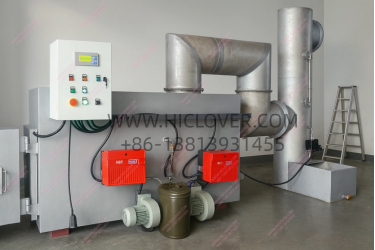
HICLOVER’s lineup of medical waste incinerators is well suited to address the realities of the Angolan healthcare and waste management environment. With models ranging from compact mobile units to high-capacity automated systems, the company offers technical flexibility and deployment adaptability.
Key features that stand out in the Angolan context include:
-
Fuel versatility: Units can operate on diesel, LPG, or natural gas depending on local availability. This reduces dependency on a single fuel source and ensures continued operation even in remote areas.
-
Containerized configuration: Mobile incinerators housed in standard ISO containers can be shipped, deployed, and commissioned quickly, without the need for permanent structures. This format suits remote clinics, donor-funded projects, and emergency response centers.
-
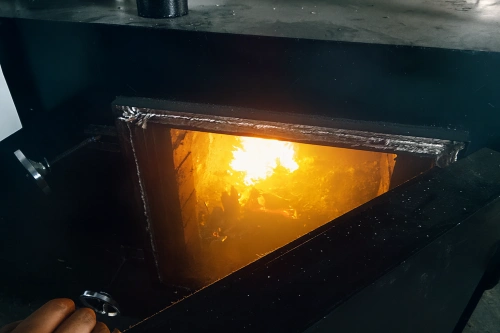
Dual-chamber combustion: Designed for complete destruction of infectious and hazardous materials, with optimized airflow and temperature control to minimize smoke and emissions.
-
Optional air filtration modules: For facilities seeking to comply with more stringent environmental requirements, wet scrubber systems and dry-filter units can be integrated.
-
PLC and automation options: For high-volume hospitals, automated feeding, burning, and ash handling reduce labor and improve operating safety.
-
No foundation requirement for some models: Particularly useful in field hospitals, border camps, and post-disaster deployments, where speed and simplicity are essential.
A Strategic Fit for Angola’s Health Development Goals
Given Angola’s current state of medical waste management, incinerators are not just equipment purchases ― they are public health investments. HICLOVER units can be integrated into:
-
Public hospitals in provincial capitals needing to modernize aging disposal systems.
-
Remote health clinics that lack access to municipal waste services.
-
Emergency response or mobile clinics where flexible deployment is essential.
-
Projects funded by international agencies or NGOs with clear environmental health goals.
By reducing exposure risks for healthcare workers, minimizing contamination near residential areas, and offering a controlled burn environment, these systems directly support Angola’s national health and environmental protection objectives.
Additional Highlight: Reliability in High-Humidity Climates
One often overlooked but critical challenge in Angola is the high humidity found in many parts of the country, particularly along the coast and in tropical inland areas. Equipment designed without consideration for corrosion and moisture exposure often suffers from reduced lifespan and reliability.
HICLOVER incinerators are manufactured with this in mind. Units feature:
-
Corrosion-resistant coatings and finishes
-
Heat-resistant insulation built for tropical use
-
Sealed control panels and wiring protections
-
Custom chimney designs with rain caps and moisture drains
This climate-aware construction ensures longevity and consistent performance in humid, saline, or dusty environments ― conditions frequently encountered across Angola’s diverse geography.
As Angola invests in expanding healthcare access, modernizing infrastructure, and improving environmental controls, medical waste incineration stands out as both a challenge and an opportunity. The country’s health facilities require practical, site-ready solutions that operate safely, reliably, and independently.
HICLOVER’s incinerators offer a tailored response to this demand. With durable engineering, modular design, and features specifically suited for the Angolan context, these systems present a clear advantage to hospitals, government agencies, and project developers seeking effective and sustainable waste treatment.
The future of medical waste management in Angola is decentralized, practical, and performance-driven. HICLOVER is ready to be part of that future.
2025-12-07/21:24:17
|
Incinerator Items/Model |
HICLOVER TS100(PLC)
|
|
Burn Rate (Average) |
100kg/hour |
|
Feed Capacity(Average) |
150kg/feeding |
|
Control Mode |
PLC Automatic |
|
Intelligent Sensor |
Continuously Feeding with Worker Protection |
|
High Temperature Retention(HTR) |
Yes (Adjustable) |
|
Intelligent Save Fuel Function |
Yes |
|
Primary Combustion Chamber |
1200Liters(1.2m3) |
|
Internal Dimensions |
120x100x100cm |
|
Secondary Chamber |
600L |
|
Smoke Filter Chamber |
Yes |
|
Feed Mode |
Manual |
|
Burner Type |
Italy Brand |
|
Temperature Monitor |
Yes |
|
Temperature Thermometer |
Corundum Probe Tube, 1400℃Rate. |
|
Temperature Protection |
Yes |
|
Automatic Cooling |
Yes |
|
Automatic False Alarm |
Yes |
|
Automatic Protection Operator(APO) |
Yes |
|
Time Setting |
Yes |
|
Progress Display Bar |
3.7 in” LCD Screen |
|
Oil Tank |
200L |
|
Chimney Type |
Stainless Steel 304 |
|
1st. Chamber Temperature |
800℃–1000℃ |
|
2nd. Chamber Temperature |
1000℃-1300℃ |
|
Residency Time |
2.0 Sec. |
|
Gross Weight |
7000kg |
|
External Dimensions |
270x170x190cm(Incinerator Main Body) |
|
Burner operation |
Automatic On/Off |
|
Dry Scrubber |
Optional |
|
Wet Scrubber |
Optional |
|
Top Loading Door |
Optional |
|
Asbestos Mercury Material |
None |
|
Heat Heart Technology(HHT) |
Optional |
|
Dual Fuel Type(Oil&Gas) |
Optional |
|
Dual Control Mode(Manual/Automatic) |
Optional |
|
Temperature Record |
Optional |
|
Enhanced Temperature Thermometer |
Optional |
|
Incinerator Operator PPE Kits |
Optional |
|
Backup Spare Parts Kits |
Optional |
|
Mobile Type |
Optional:Containerized/Trailer/Sledge Optional |