Small Trailer-Mounted Incinerators for Railway Maintenance Camps in Desert Regions
Waste Management Challenges Along Remote Railway Lines
Railway infrastructure often extends far beyond urban centers, crossing desert regions, arid plateaus, and sparsely populated territories. In areas such as Central Asia, North Africa, the Middle East, and inland corridors of Western China, railway maintenance segments and desert railway camps are frequently established as semi-permanent or seasonal operational bases.
These railway maintenance camps support track inspection, ballast replacement, signaling repair, and rolling-stock servicing. Along with technical operations, they inevitably generate daily living waste from workers, including:
-
Domestic mixed waste
-
Plastic containers and packaging
-
Oil-contaminated cloth, tarpaulins, and oily rags
Due to their remote location, these sites are often disconnected from municipal waste collection systems. Long-distance waste transport is costly, logistically complex, and environmentally inefficient.
As a result, on-site waste treatment becomes a practical necessity rather than an optional upgrade.
Why Incineration Is Suitable for Desert Railway Maintenance Camps
For railway maintenance sections in desert environments, waste treatment systems must adapt to:
-
High ambient temperatures
-
Limited water availability
-
Unstable or absent grid electricity
-
Mobile or temporary camp layouts
Under such constraints, small-scale incineration offers several technical advantages:
-
Significant volume reduction of waste
-
Immediate on-site disposal without transport
-
Controlled combustion of plastic and oily waste
-
Reduced risk of secondary pollution caused by open dumping
In particular, small trailer-mounted incinerators are well-suited to railway maintenance scenarios where flexibility and autonomy are critical.
Small Trailer-Mounted Incinerator: Configuration for Railway Use
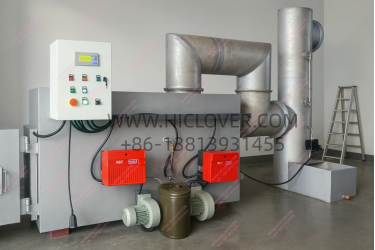
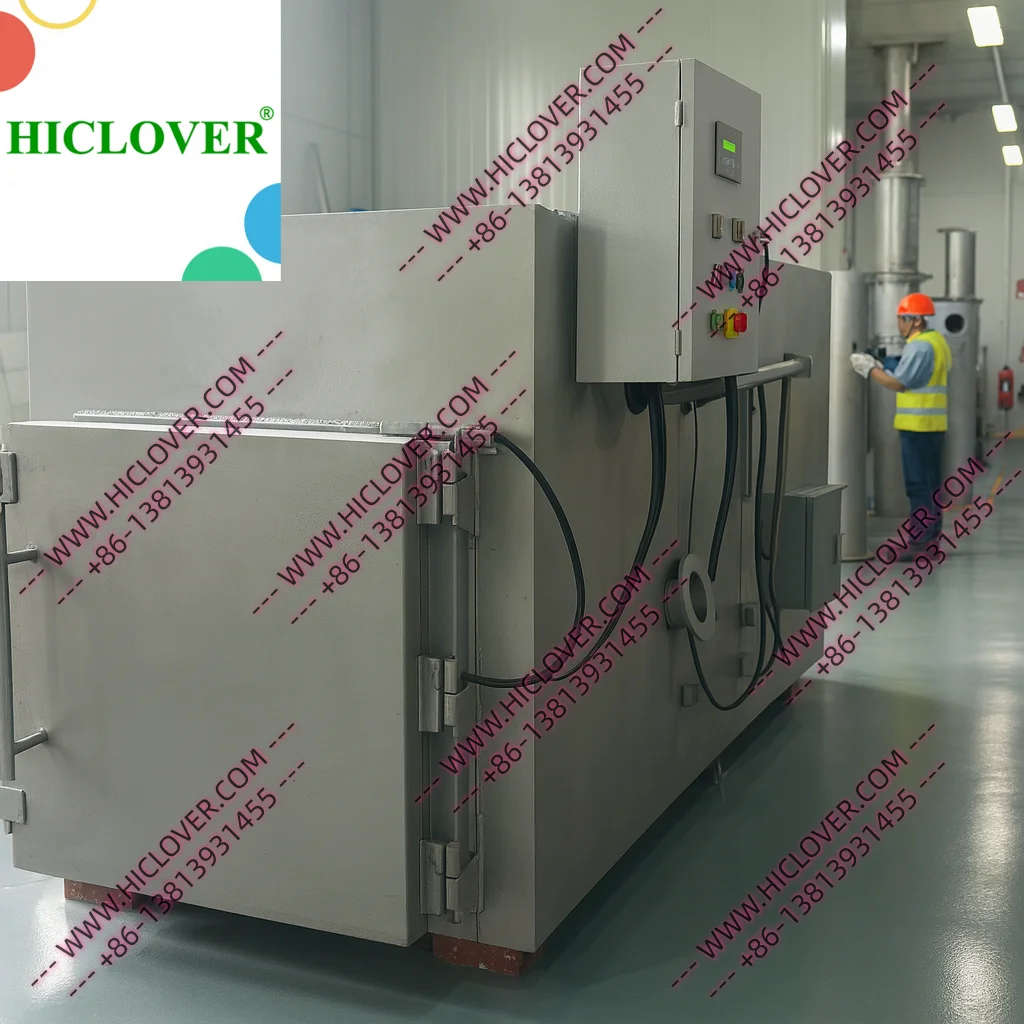
A small trailer-mounted incinerator, designed for mobile or semi-fixed operation, aligns closely with the working conditions of desert railway camps.
Key Configuration Features
-
Trailer-mounted structure
Allows the incinerator to be repositioned along railway sections as maintenance zones shift. -
Generator-powered operation
The incinerator can be powered by a diesel generator, ensuring independence from local power grids. -
Compact footprint
Suitable for confined railway camp layouts without permanent civil foundations. -
Batch or semi-continuous operation
Matches the intermittent waste generation pattern of maintenance crews.
For reference, HICLOVER develops multiple mobile and trailer-based incinerator configurations optimized for remote environments:
https://www.hiclover.com/mobile-incinerator/
Types of Waste Commonly Generated in Railway Camps
1. Workers’ Domestic Waste
Railway maintenance camps often house dozens of workers for extended periods. Daily waste streams typically include:
-
Food leftovers
-
Paper and cardboard
-
Mixed household refuse
A small incinerator enables same-day disposal, reducing hygiene risks and pest attraction in desert climates.
2. Plastic Containers and Packaging
Maintenance operations rely heavily on packaged materials such as lubricants, spare parts, bottled water, and protective equipment. These generate:
-
Plastic containers
-
Shrink wrap
-
Composite packaging
Incineration provides an effective solution where recycling infrastructure is unavailable.
3. Oil-Contaminated Cloth and Tarpaulins
Railway maintenance involves lubrication, mechanical servicing, and equipment protection. This results in:
-
Oily rags
-
Oil-soaked cloth
-
Contaminated tarpaulins
Such waste is unsuitable for landfill disposal and poses environmental risks if improperly handled. Controlled incineration ensures safe destruction under high temperatures.
Related technical reference:
https://www.hiclover.com/oil-waste-incinerator/
Application Scenarios Along Desert Rail Corridors
Desert Railway Camps in Central Asia
Railway corridors crossing Kazakhstan, Uzbekistan, and western Mongolia often rely on mobile maintenance camps due to vast distances between stations. Trailer-mounted incinerators allow waste treatment to move together with maintenance operations.
Arid Railway Sections in North Africa
In regions such as southern Algeria, eastern Morocco, and inland Egypt, railway maintenance bases are frequently isolated from municipal infrastructure. Generator-powered incinerators provide autonomy under extreme climatic conditions.
Inland Railway Projects in the Middle East
Railway expansions across Saudi Arabia, Oman, and Jordan include long desert segments. Maintenance camps established along these lines require compact, transportable waste treatment solutions compatible with desert logistics.
Advantages of Trailer-Mounted Incinerators for Railway Operators
From an operational perspective, small trailer-mounted incinerators offer railway authorities and contractors several advantages:
-
Reduced waste transport costs
-
Improved on-site environmental control
-
Flexible relocation without dismantling
-
Compliance with basic environmental and safety requirements
Compared with fixed installations, trailer-based systems align better with temporary railway maintenance segments.
HICLOVER’s small-scale incinerator solutions are designed with these operational realities in mind:
https://www.hiclover.com/incinerator/
Environmental and Operational Considerations
While small incinerators are compact, proper operation remains essential:
-
Controlled combustion temperatures
-
Proper ash handling
-
Basic flue gas dispersion via stack design
For railway camps operating in sensitive desert ecosystems, responsible incineration helps minimize land contamination and visual pollution compared with open dumping or uncontrolled burning.
Technical overview of compact incineration systems:
https://www.hiclover.com/small-incinerator/
Conclusion
Railway maintenance segments and desert railway camps represent a distinct waste management environment characterized by mobility, remoteness, and operational variability. In such contexts, small trailer-mounted incinerators powered by generators provide a practical, adaptable solution for treating workers’ domestic waste, plastic containers, and oil-contaminated materials.
Rather than relying on long-distance waste transport or informal disposal methods, railway operators can evaluate mobile incineration as part of a structured environmental management approach suited to desert rail infrastructure.
For technical specifications and configuration options related to mobile and trailer-mounted incinerators, visit:
https://www.hiclover.com/
2025-12-14/01:28:21
|
Incinerator Items/Model |
HICLOVER TS100(PLC)
|
|
Burn Rate (Average) |
100kg/hour |
|
Feed Capacity(Average) |
150kg/feeding |
|
Control Mode |
PLC Automatic |
|
Intelligent Sensor |
Continuously Feeding with Worker Protection |
|
High Temperature Retention(HTR) |
Yes (Adjustable) |
|
Intelligent Save Fuel Function |
Yes |
|
Primary Combustion Chamber |
1200Liters(1.2m3) |
|
Internal Dimensions |
120x100x100cm |
|
Secondary Chamber |
600L |
|
Smoke Filter Chamber |
Yes |
|
Feed Mode |
Manual |
|
Burner Type |
Italy Brand |
|
Temperature Monitor |
Yes |
|
Temperature Thermometer |
Corundum Probe Tube, 1400℃Rate. |
|
Temperature Protection |
Yes |
|
Automatic Cooling |
Yes |
|
Automatic False Alarm |
Yes |
|
Automatic Protection Operator(APO) |
Yes |
|
Time Setting |
Yes |
|
Progress Display Bar |
3.7 in” LCD Screen |
|
Oil Tank |
200L |
|
Chimney Type |
Stainless Steel 304 |
|
1st. Chamber Temperature |
800℃–1000℃ |
|
2nd. Chamber Temperature |
1000℃-1300℃ |
|
Residency Time |
2.0 Sec. |
|
Gross Weight |
7000kg |
|
External Dimensions |
270x170x190cm(Incinerator Main Body) |
|
Burner operation |
Automatic On/Off |
|
Dry Scrubber |
Optional |
|
Wet Scrubber |
Optional |
|
Top Loading Door |
Optional |
|
Asbestos Mercury Material |
None |
|
Heat Heart Technology(HHT) |
Optional |
|
Dual Fuel Type(Oil&Gas) |
Optional |
|
Dual Control Mode(Manual/Automatic) |
Optional |
|
Temperature Record |
Optional |
|
Enhanced Temperature Thermometer |
Optional |
|
Incinerator Operator PPE Kits |
Optional |
|
Backup Spare Parts Kits |
Optional |
|
Mobile Type |
Optional:Containerized/Trailer/Sledge Optional |